ServicesWisdom Teeth Removal
Wisdom Teeth Removal in Trophy Club
A third molar that grows in tilted, stays partly under the gum, or simply has no room can inflame the gum and decay the tooth beside it. We image each one in 3D, walk you through the findings, and take it out with gentle care so the site heals well.
Why Wisdom Teeth Cause Trouble
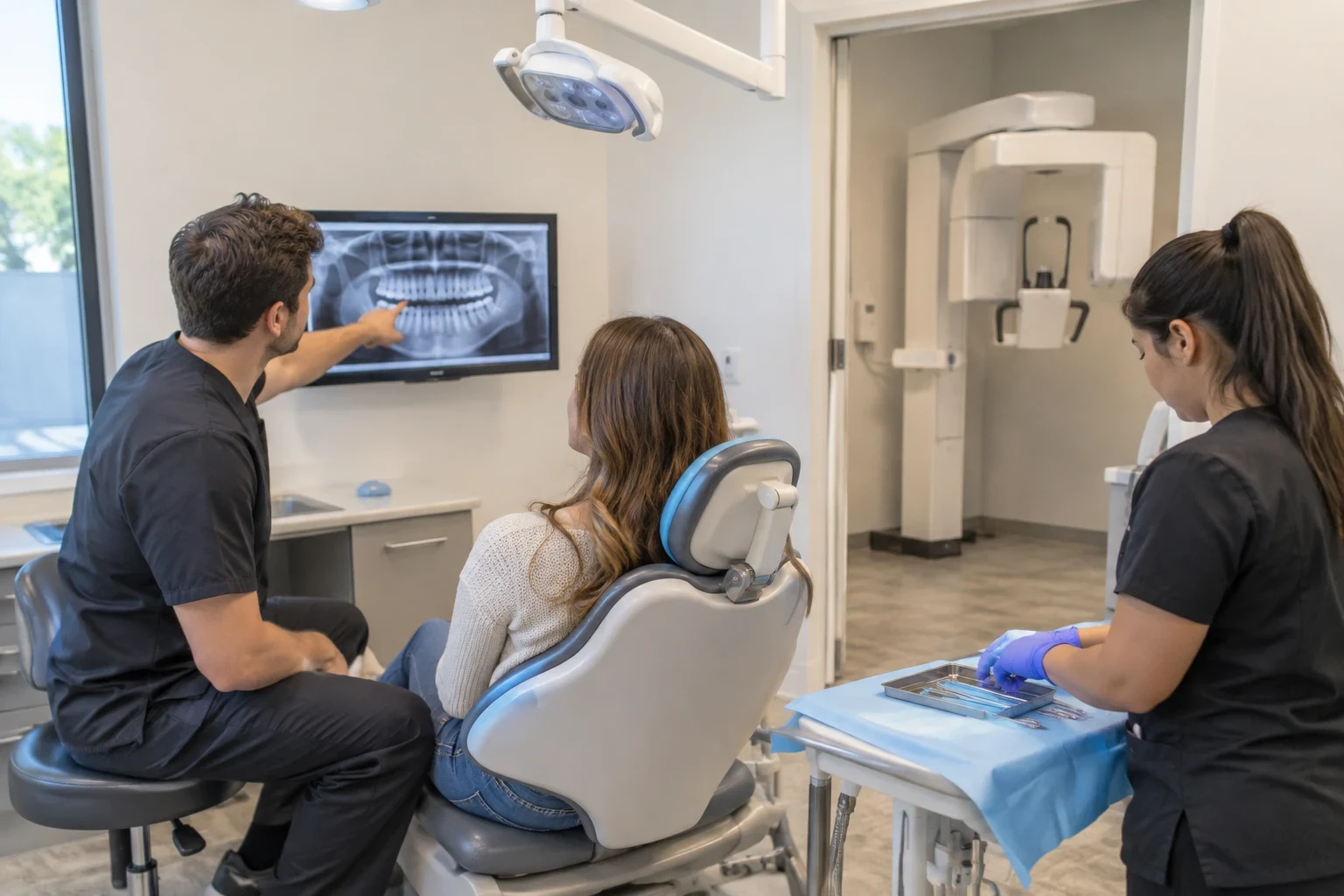
Wisdom teeth are the third molars, the last teeth to form, usually arriving between the late teens and mid-twenties. Most jaws have run out of room by then. The tooth tips forward into the second molar, lies on its side under the gum, or breaks through only partway. That partial opening traps food and bacteria in a pocket you cannot brush.
Not every wisdom tooth has to come out. A third molar that is fully upright, cleanable and healthy can stay, and we will tell you so. When a tooth is impacted, infected or damaging its neighbor, removal is usually the simpler path, and it is easier at 20 than at 45, when roots are longer and bone is denser.
Your wisdom teeth are removed by a board-certified dentist in our office, the same team you see for cleanings and checkups. We treat you the way we would treat a neighbor: plain answers, no pressure, and a call to see how you are doing after.
What Your Wisdom Teeth Visit Includes
3D CBCT imaging
A standard X-ray is flat. A CBCT scan, taken when needed, shows the root shape and how close the lower roots sit to the inferior alveolar nerve, and how close the upper roots sit to the sinus floor.
A written treatment plan
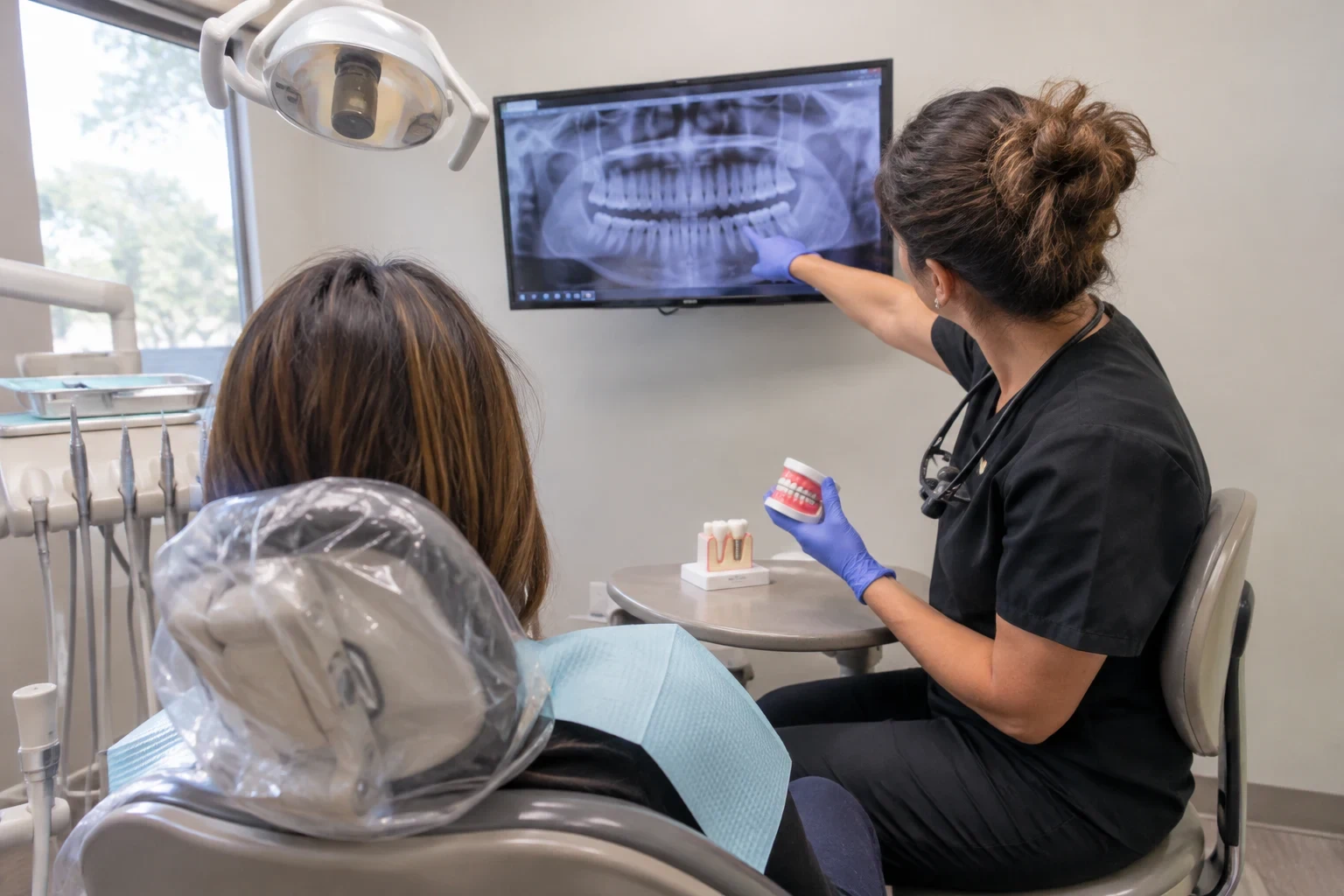
We go over which teeth need to come out, which can stay, and why. You see the images on screen and get the plan in writing before anything is scheduled.
Local anesthesia and comfort checks
We numb the area thoroughly and confirm it is fully numb before we begin. During the procedure we check in, and you can raise a hand to pause at any point.
Careful removal and sectioning
An erupted tooth may lift out in one piece. An impacted tooth is often divided into sections so it comes out with less bone removed and less stress on the jaw.
Sutures, gauze and aftercare
We place dissolvable stitches where needed, send you home with gauze and written instructions, and walk you through eating, rinsing and pain control for the first week.
Signs Your Wisdom Teeth Need Attention
- Swollen gum behind the last molar
- A tender, puffy flap of gum over a half-erupted tooth is called pericoronitis. It tends to flare again and again until the tooth comes out.
- Pain that spreads to the jaw or ear
- Pressure from an impacted molar can ache along the jawline, into the ear, or down into the neck, especially when you chew.
- Bad taste or bad breath that returns
- Food and bacteria trapped under a gum flap produce a sour taste that brushing does not fix.
- Trouble opening wide
- Stiffness when you open your mouth can mean infection is irritating the chewing muscles near the back molars.
- Crowding or decay on the second molar
- A tooth angled into its neighbor can push it, and it creates a crevice where a cavity starts on the back of the second molar.
How Removal Day Works
- 1
Evaluation and scan
Your first visit starts with an exam of the back of the mouth and digital X-rays. If a tooth looks impacted, we take a CBCT scan as well. Then we show you how each tooth is angled and how near it sits to the nerve or sinus.
- 2
Numbing and preparation
On removal day we start with a topical gel, then give local anesthetic. We do not begin until the area is fully numb, so what you feel is pressure, not sharp pain.
- 3
Removal
For a buried tooth we open the gum, take away a small amount of bone when needed, and divide the tooth into sections. Each piece comes out separately, and we rinse the socket clean.
- 4
Closing and going home
We place stitches, have you bite on gauze while a clot forms, and go over your aftercare. Most patients take it easy that day and resume light activity within two to three days.
- 5
Follow-up
We check in after the procedure and schedule another look if healing needs it. Phone us if swelling grows after day three or a throbbing ache sets in, since that can point to dry socket.
What Affects the Cost
How each tooth sits in the jaw drives most of the price, so we image before we quote. Once we have gone over the scan together, you get an itemized estimate before anything is put on the calendar. That way you plan around real numbers, not a guess.
- Depth of impaction
- A tooth that has fully come in is a simple extraction. A soft-tissue impaction sits under gum only. A partial or full bony impaction is locked in the jawbone and needs bone removal and sectioning, which adds chair time.
- How many teeth come out
- Removing two or four teeth in one visit usually takes less total chair time than spreading them over several appointments. You also recover from a single procedure instead of several.
- Imaging needed
- Our $25 Focused Evaluation covers a comprehensive exam, digital X-rays, a CBCT scan if needed, treatment planning and consultation. Straightforward cases may not need the 3D scan at all.
- Insurance and payment options
- More than 15 major PPO dental plans count our office as in-network. Patients without coverage can look at our in-house Membership Plan instead. Financing at 0% interest for up to 24 months is also available, and seeing whether you preapprove has no effect on your credit score.
Wisdom Teeth Questions We Hear Often
- Do all four wisdom teeth have to come out?
- No. We recommend removal only for teeth that are impacted, infected, decayed or pushing on the second molar. If an upper tooth is healthy and the lower one is not, we may take out just one or two. The scan answers that question.
- Will I be awake during the procedure?
- Yes. We use local anesthesia, so the area is numb while you stay awake. Expect pressure and some sounds, but not sharp pain. We work at a steady pace and stop whenever you raise a hand.
- How long is recovery?
- Swelling tends to peak on the second or third day, then eases. Most patients stay with soft foods for several days and are back to their usual routine within a week. A tooth that was deep in bone may need a few extra days before the jaw feels normal.
- I keep hearing about dry socket. What causes it?
- Dry socket, or alveolar osteitis, happens when the blood clot in the socket loosens and leaves bone exposed. The result is a deep, throbbing ache that usually starts a few days after surgery. Avoid straws, smoking and forceful spitting for the first several days to protect the clot. If it does happen, we clean the socket and place a soothing dressing.
- Will my PPO insurance cover wisdom teeth removal?
- Many PPO plans pay a portion, depending on your plan and whether the tooth is impacted. Our office is in-network with more than 15 major PPO dental plans. Before your appointment, our team looks up your benefits and shows you the share you can expect to pay.
- Is there a best age to have them removed?
- Late teens to early twenties is often easiest, since the roots are still forming and the bone is softer. Adults can still have them removed safely. As roots lengthen with age, planning from a 3D scan matters even more.
Find Out What Your Wisdom Teeth Need
Start with a $25 focused evaluation and a 3D look at your third molars. Patients come to us from Trophy Club, Roanoke, Southlake and the surrounding area.