ServicesRoot Canals
Root Canals in Trophy Club
A root canal removes infected or inflamed pulp from inside a tooth, disinfects the canals and seals them so you keep the tooth instead of losing it. We numb thoroughly, explain each step and tell you plainly whether your tooth is worth saving.
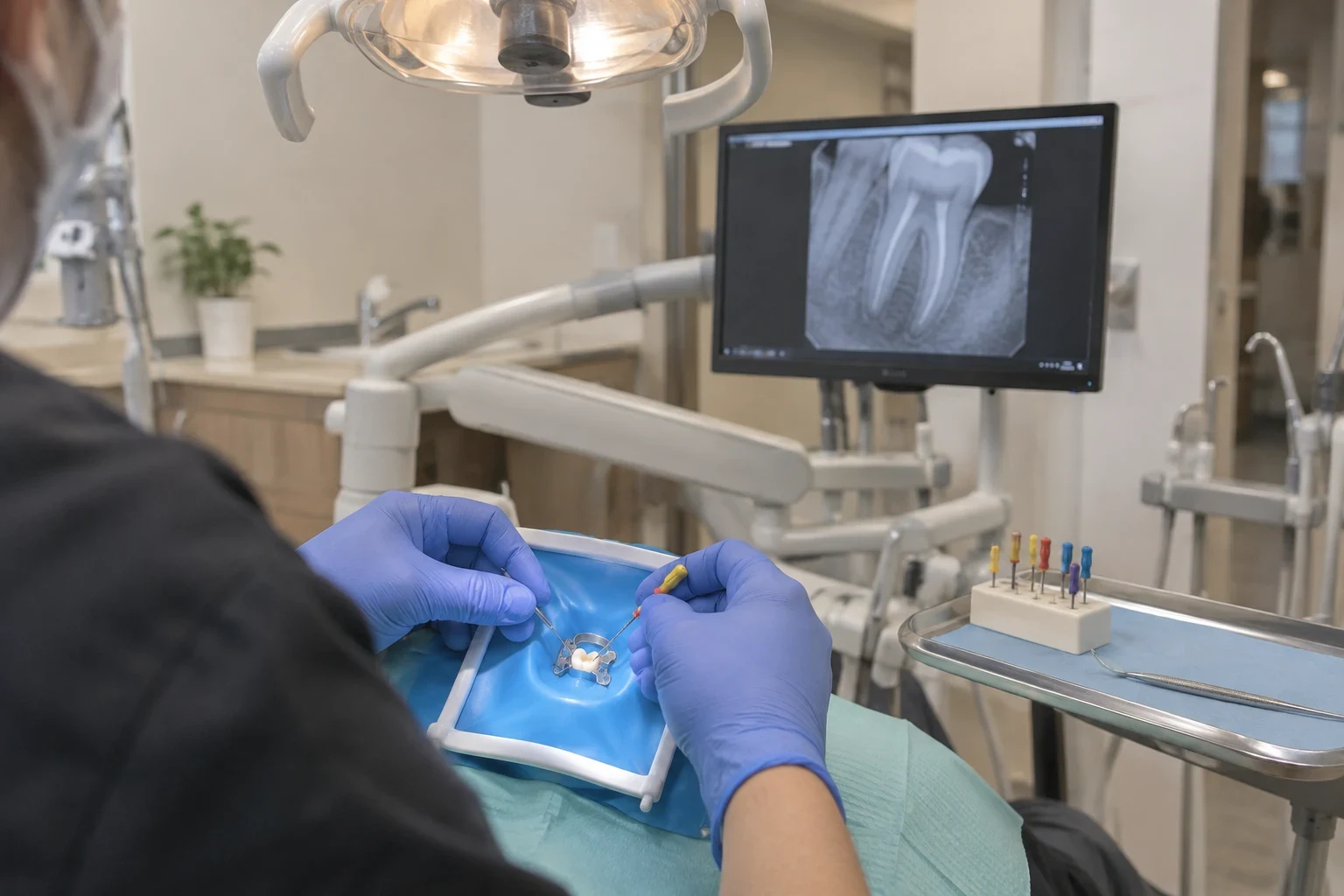
Saving a Tooth From the Inside
Beneath the enamel and dentin sits the pulp, a core of nerve tissue and blood vessels that travels through thin channels inside each root. Bacteria can get to it through a cavity that has gone too far, a fracture line or the leaking edge of an old, oversized filling. Infected pulp does not recover by itself, and left alone the infection can move out of the root end and into the surrounding bone.
Root canal treatment takes out that damaged tissue, cleans the canal system and seals it shut. The outer tooth and its roots stay in place, which keeps your bite, the bone around the tooth and the neighboring teeth where they belong.
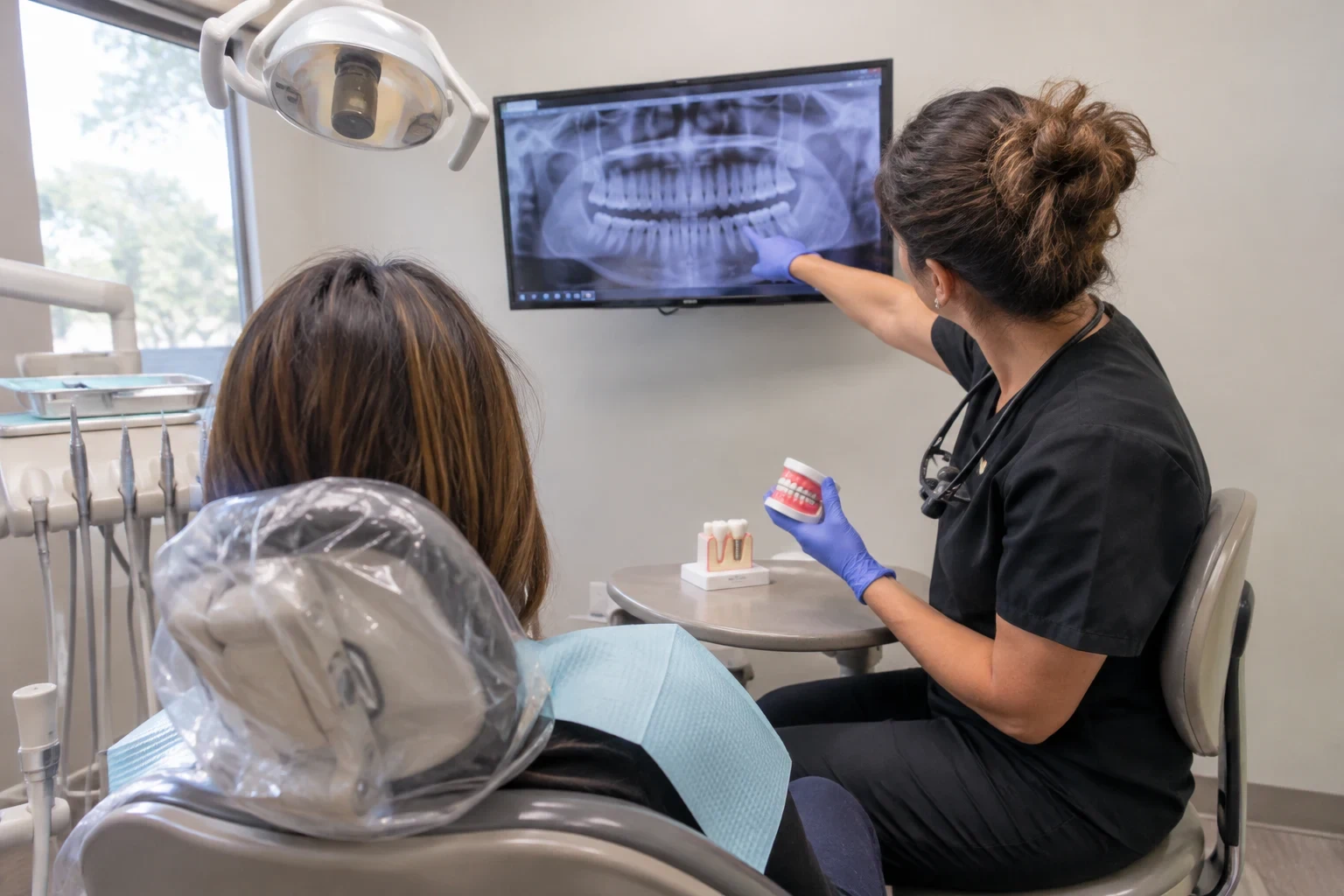
It is not always the right call. When a fracture runs below the gumline, or too little tooth structure remains to support a crown, removing the tooth and placing a dental implant may last longer. A board-certified dentist reviews your X-rays, and a 3D CBCT scan when needed, before recommending either path, and we show you the images so you can see the reason for yourself.
What Your Root Canal Treatment Includes
- Imaging and diagnosis
- Digital X-rays show how deep the decay goes and whether the bone at the root tip has changed. If the canal layout is hard to read or we suspect a hidden fracture, a CBCT scan shows the tooth in three dimensions.
- Thorough numbing and isolation
- We confirm the tooth is fully numb before we begin. A thin rubber dam goes around the tooth so saliva and bacteria stay out of the canals and the rinsing solutions stay out of your mouth.
- Removing the pulp and preparing each canal
- Slender nickel-titanium instruments clear out the damaged tissue and widen every canal down to the root tip, with the length checked by an electronic apex locator. Disinfecting rinses then flush the small side branches that instruments cannot reach.
- Sealing with gutta-percha
- Each canal is filled with gutta-percha, a rubber-like material, along with a sealer that closes the space so bacteria cannot move back in.
- Rebuilding the tooth
- A treated tooth is more brittle, molars most of all. We place a core build-up and usually recommend a crown so the tooth does not split under chewing force.
Signs a Tooth May Need a Root Canal
Sensitivity that lingers
A quick zing from something cold is normal. When the ache keeps going for half a minute or longer after you swallow, the pulp is often inflamed.
Pain when you bite down
Soreness while chewing can mean the infection has spread beyond the root tip into the ligament that holds the tooth in its socket.
A bump on the gum
A small pimple near the root that drains and returns points to an abscess. It may be painless, but the bacteria are still active.
Discoloration after an injury
A tooth that turns dark or grayish weeks after a fall or a blow usually has a dead pulp, even once the pain has eased.
Throbbing that wakes you
Aching that starts on its own, especially when you lie down at night, is a common sign of pulp damage that will not reverse.
How Your Visit Goes
- 1
Exam and an honest answer
We test the tooth with cold and tapping, take images and explain what we found. You hear whether the tooth can be saved and what each option involves before anything starts.
- 2
Treatment in the chair
Most front teeth take about an hour and molars longer, since they can have three or four canals. You can listen to music, raise a hand for a break at any point, and we check comfort as we go.
- 3
Temporary seal and recovery
A temporary filling closes the access opening. Expect some soreness on biting for a few days, which over-the-counter pain relievers usually handle.
- 4
Final restoration
Once the tooth settles, we place the permanent build-up and crown so it can take full chewing force again.
What Affects the Cost of a Root Canal
Once the exam is done, we hand you a written estimate with the root canal and the crown on separate lines, so nothing new appears on the bill later. Plenty of our patients pay with PPO coverage, and we are in-network with 15+ major PPO dental insurance plans.
- Which tooth it is
- A front tooth typically has one canal. Molars tend to have three or four, frequently curved, and every one must be shaped and cleaned all the way to its tip, so the appointment runs longer.
- First treatment or retreatment
- If a root canal done years ago has broken down, the old gutta-percha has to come out before the canals can be disinfected again. Removing it adds chair time.
- The crown afterward
- Premolars and molars almost always need a crown after the canals are sealed. That crown is a separate charge from the root canal itself.
- Insurance and payment
- Patients without dental insurance can join our In-house Membership Plan. We also offer 0% interest financing for up to 24 months, and checking for preapproval has no credit score impact.
Root Canal Questions
Something not covered here? (817) 687-2329
Does a root canal hurt?
With the tooth completely numb, the treatment feels a lot like getting a filling. The throbbing that gives root canals their reputation is usually the infected pulp itself, before anyone touches it. Once the anesthetic wears off, expect the tooth to feel tender when you bite for a few days.
Is it better to just pull the tooth?
When the tooth is restorable, keeping your natural root is usually the better choice, because it holds the bone and your bite in place. If the tooth is cracked too deep or too broken down, we will say so and walk you through extractions and dental implants instead.
Will the tooth need a crown when the root canal is finished?
Back teeth nearly always do. Removing the pulp and opening an access hole leave the tooth thinner from the inside, and the force of chewing on a premolar or molar can split it unless a crown holds it together. A front tooth with only minor damage can sometimes be closed with a filling instead.
Can I go back to work the same day?
Yes, most patients do. The numbness fades within a few hours. Chew on the other side until feeling returns and until the permanent restoration is placed.
How long does a treated tooth last?
A well-sealed root canal under a good crown can last for decades. The main threats are fresh decay along the crown margin and fracture, which is why regular checkups and cleanings matter.
Keep the Tooth You Have
If a tooth aches, lingers after cold or hurts when you chew, have it looked at before the infection spreads. Patients come to us from Trophy Club, Roanoke and Keller for a clear answer and gentle care.