ServicesEmergency Dentistry
Emergency Dentistry in Trophy Club
A cracked molar, a swollen gum or a crown that came off at dinner needs a dentist who finds the cause, not just the pain. Call us and we will set an appointment, take the X-rays we need and explain your options before any treatment starts.
When a tooth problem can't wait for a routine visit
Most dental pain has a cause you can name. Deep decay that reaches the pulp inflames the nerve inside the tooth. A crack running down from a chewing cusp flexes every time you bite. An infection at the root tip builds pressure in the bone until the gum swells. Each one gets worse with time, and each one has a different fix.
Our job at an urgent visit is to find which problem you have, relieve it, and give you a written treatment plan for what comes next. Sometimes that is a temporary filling and a follow-up. Sometimes the tooth needs a root canal, an extraction, or later a dental implant. We tell you which, and why, the way we would explain it to a neighbor.
If you have swelling spreading toward your eye or neck, trouble swallowing or trouble breathing, go to a hospital ER first. Those signs mean the infection needs care a dental office cannot give.
What an urgent dental visit covers
- Focused exam and digital X-rays
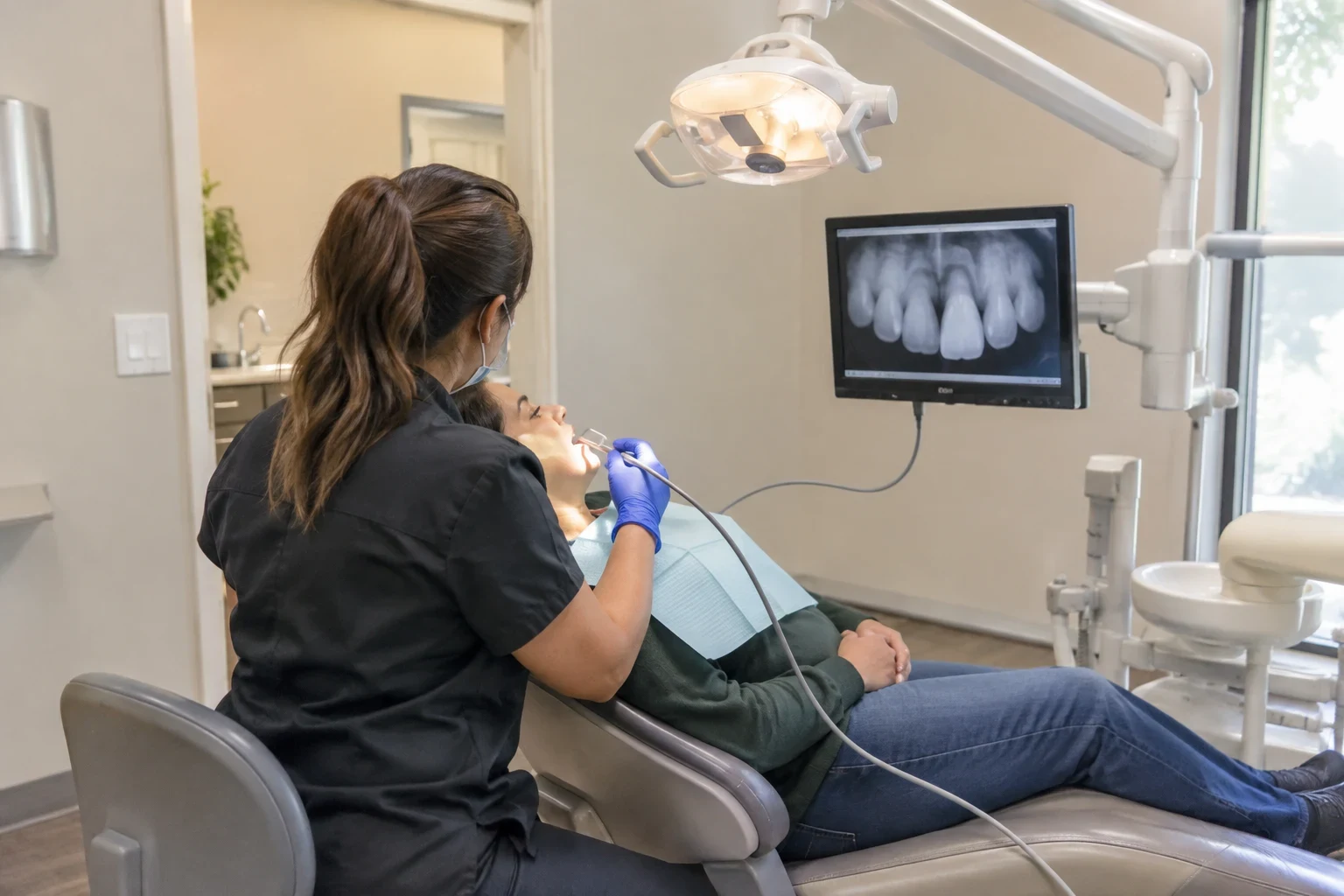
- We look at the painful area, tap and cold-test the tooth, and take digital X-rays to see the root and the bone around it. When a hidden root fracture or the jaw may be involved, a CBCT scan gives us a 3D view.
- Relief that targets the cause
- First we numb the tooth and surrounding gum with a local anesthetic so you stay comfortable while we work. Then we deal with what is driving the pain: draining an abscess, clearing out inflamed pulp tissue to begin a root canal, or rounding off a jagged fractured edge that keeps catching your tongue.
- Broken teeth and lost crowns
- A crown that came off can often be cleaned and cemented back on if the tooth under it is sound. A chipped edge may be rebuilt with tooth-colored composite filling material. A fracture that ends below the gumline usually means the tooth cannot be kept, and we will say so plainly.
- Extractions when a tooth can't be saved
- If decay or a split root leaves too little healthy structure, we remove the tooth with gentle care and talk with you about replacing it with dental implants, a bridge or dentures.
- Wisdom tooth flare-ups
- A partly erupted wisdom tooth can trap food under the gum flap and cause pericoronitis. We clean the area, settle the infection and plan wisdom teeth removal if it keeps coming back.
Signs you should be seen soon
Pain that lingers after cold
A quick twinge that fades is often simple sensitivity. Pain that lasts 30 seconds or more after a cold drink, or throbs on its own at night, points to an inflamed nerve.
A bump on the gum or a bad taste
A small pimple near the root of a tooth is a fistula, a channel an abscess has made to drain. The pain may ease, but the infection is still there.
Sharp pain when you release a bite
This is a classic cracked tooth sign. The crack opens as you bite down and snaps shut on release, irritating the pulp.
Swelling in the gum, cheek or jaw
Swelling means infection has spread past the tooth itself. Get it looked at promptly.
A knocked-out or loosened tooth
Pick up a knocked-out adult tooth by the crown, never the root, keep it moist in milk, and get to a dentist quickly. A tooth replanted soon has a far better chance than one left to dry.
What affects the cost of urgent care
We can't price a tooth until we know what is wrong with it, so diagnosis comes before any quote. For many patients the first step is our $25 Focused Evaluation, which covers a comprehensive exam, digital X-rays, a CBCT scan if needed, plus treatment planning and consultation. Once we know the cause, you get a written estimate for the treatment that tooth actually needs.
The diagnosis itself
Recementing a loose crown, placing a sedative filling, doing a root canal and removing a tooth are separate procedures, and each carries its own fee.
Which tooth and how many canals
Front teeth usually have a single canal. Molars often have three or four, and those canals tend to be narrow and curved, so cleaning and sealing them takes longer.
Imaging needed
Most cases need only standard digital X-rays. A CBCT scan comes in when we suspect a fracture, need to map an infection or have to check how close a nerve sits.
What the tooth needs afterward
A back tooth that has had a root canal usually needs a crown so it doesn't split under chewing force. If a tooth comes out, you may later choose an implant or a bridge to fill the gap.
Insurance, membership or financing
If you carry PPO coverage, check with us: our office is in-network with 15+ major PPO dental insurance plans. Patients without coverage have the option of our in-house Membership Plan. We also offer 0% interest financing for up to 24 months, and checking for preapproval has no impact on your credit score.
How your visit runs
- 1
You call and describe what's happening
Tell us where it hurts, for how long, and whether there is swelling. We use that to set your appointment and tell you how to protect a broken tooth until you arrive.
- 2
Exam, X-rays and a clear diagnosis
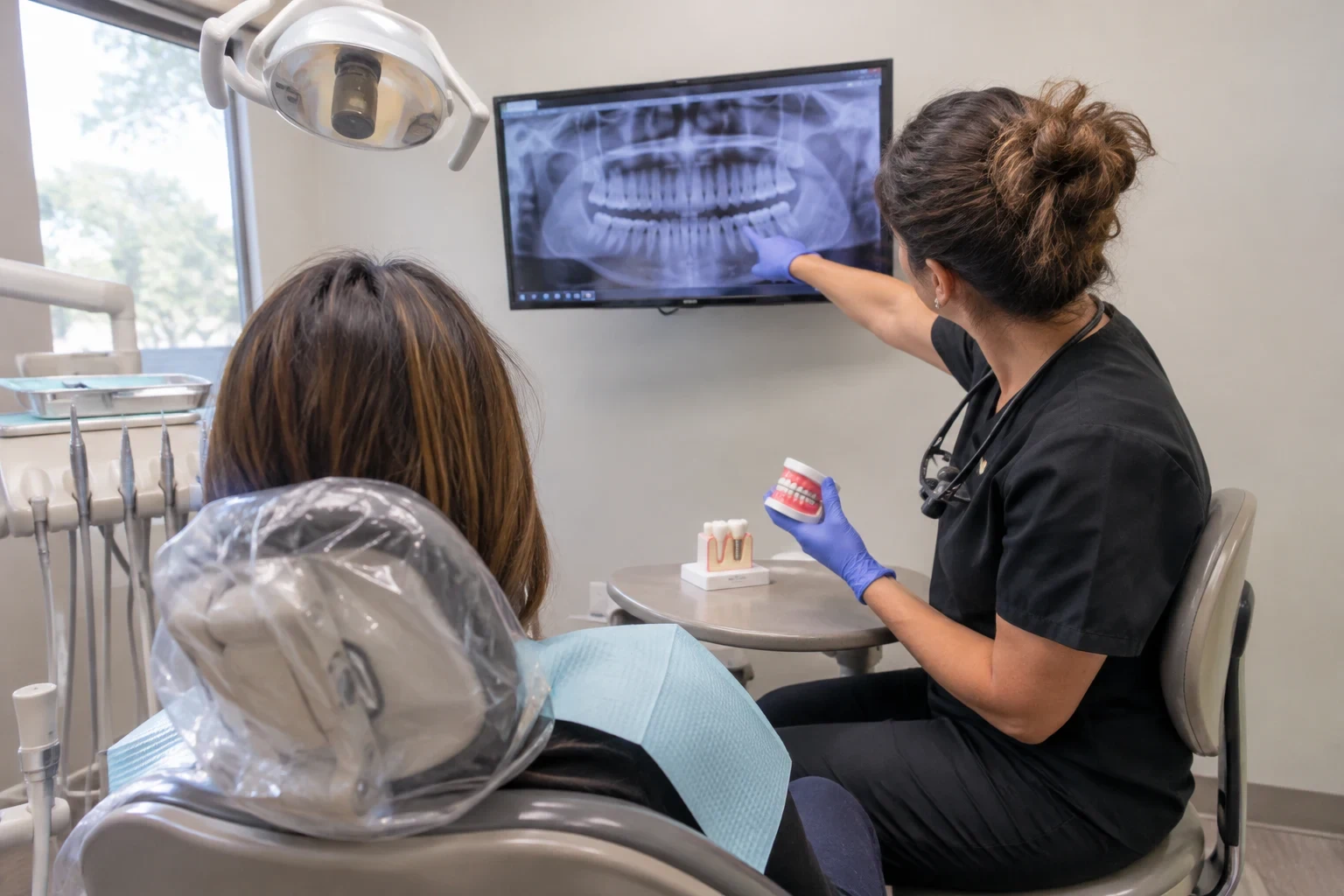
Our Board-certified dentist examines the tooth, reviews the images with you on screen and names the problem in plain terms. You see what we see.
- 3
Options and costs before treatment
You get the choices, for example a root canal and crown versus an extraction, with what each costs and how your insurance applies. Nothing starts until you agree.
- 4
Treatment or stabilization
When time allows, we complete the fix at that visit. Otherwise we relieve the pain, place a temporary and book a follow-up for the rest.
- 5
Aftercare you can follow
You leave with clear instructions for eating, cleaning and any medication, plus what to watch for. If something changes, call us and we will talk it through.
Questions about urgent dental care
How soon can you see me?
We fit urgent patients in as quickly as our schedule allows and tell you honestly when the next opening is. If what you describe sounds like it can't wait, such as swelling that is spreading, we will tell you to go to an ER instead.
Can I just take antibiotics and wait?
Antibiotics can calm a spreading infection, but they cannot reach the source inside a dead or infected tooth. The infection usually returns once the course ends. The tooth itself needs a root canal or an extraction to clear it.
My pain stopped. Do I still need to come in?
Often, yes. When an infected nerve dies, the pain can fade while bacteria keep working at the root tip. A quick exam and X-ray will show whether an abscess is forming.
Can a broken tooth be saved, or does it have to come out?
It depends on where the break ends. If the fracture stays above the gumline and the root is intact, a crown, sometimes with a root canal first, can usually save it. A crack that runs down the root generally can't be sealed, so extraction is the better choice.
Do you see patients from nearby towns?
Yes. Patients come to us from Roanoke, Southlake, Flower Mound, Keller and the rest of the area around Trophy Club. Tell us where you're coming from when you call and we'll plan the appointment around it.
Get that tooth checked before it gets worse
Tell us what you're feeling and we'll set an appointment. If you're new to us, the visit can start with our $25 focused evaluation.