ServicesExtractions
Tooth Extraction Care in Trophy Club
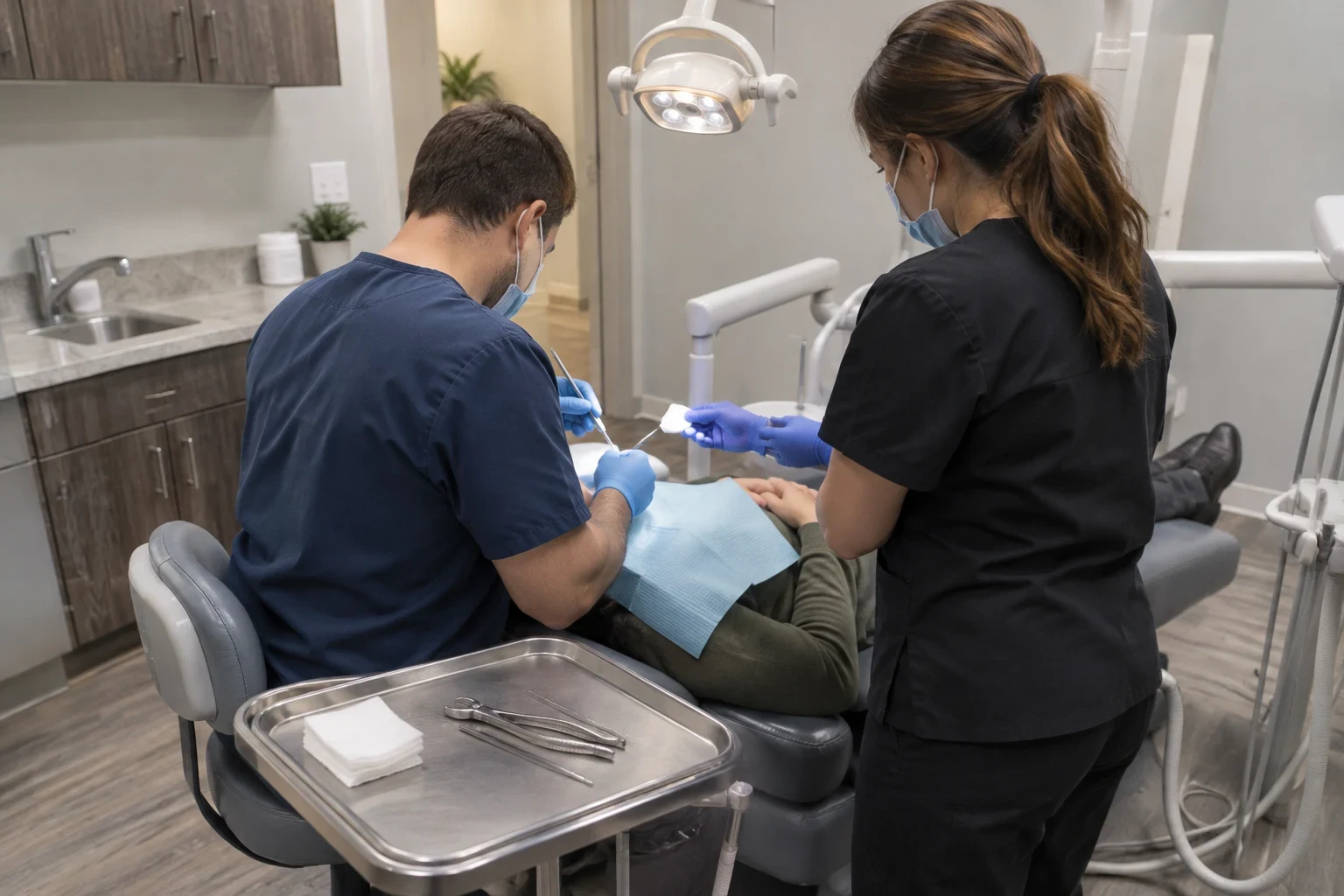
Some teeth are split into the root, rotted past repair or loosened by bone loss. We take them out slowly and carefully, then protect the socket so it heals clean. You hear the reason, the steps and the replacement options before we start.
Why Some Teeth Have to Come Out
Saving a natural tooth is always our first choice. Plenty of painful teeth can be kept with a root canal and a crown, and we say so plainly when that is the smarter route. Others are past saving: a root that has split lengthwise, decay that runs below the bone level, or gum disease that has eaten away the bone anchoring the tooth.
Each tooth is held in its socket by the periodontal ligament, a band of fibers between the root and the bone. Working those fibers loose a little at a time, rather than forcing the tooth, keeps the surrounding bone in one piece. That bone is what a future implant needs, so we plan every extraction as the opening step of what comes next, the same care we would want for a neighbor.
What Happens During Your Extraction
- X-rays and, when needed, a 3D scan
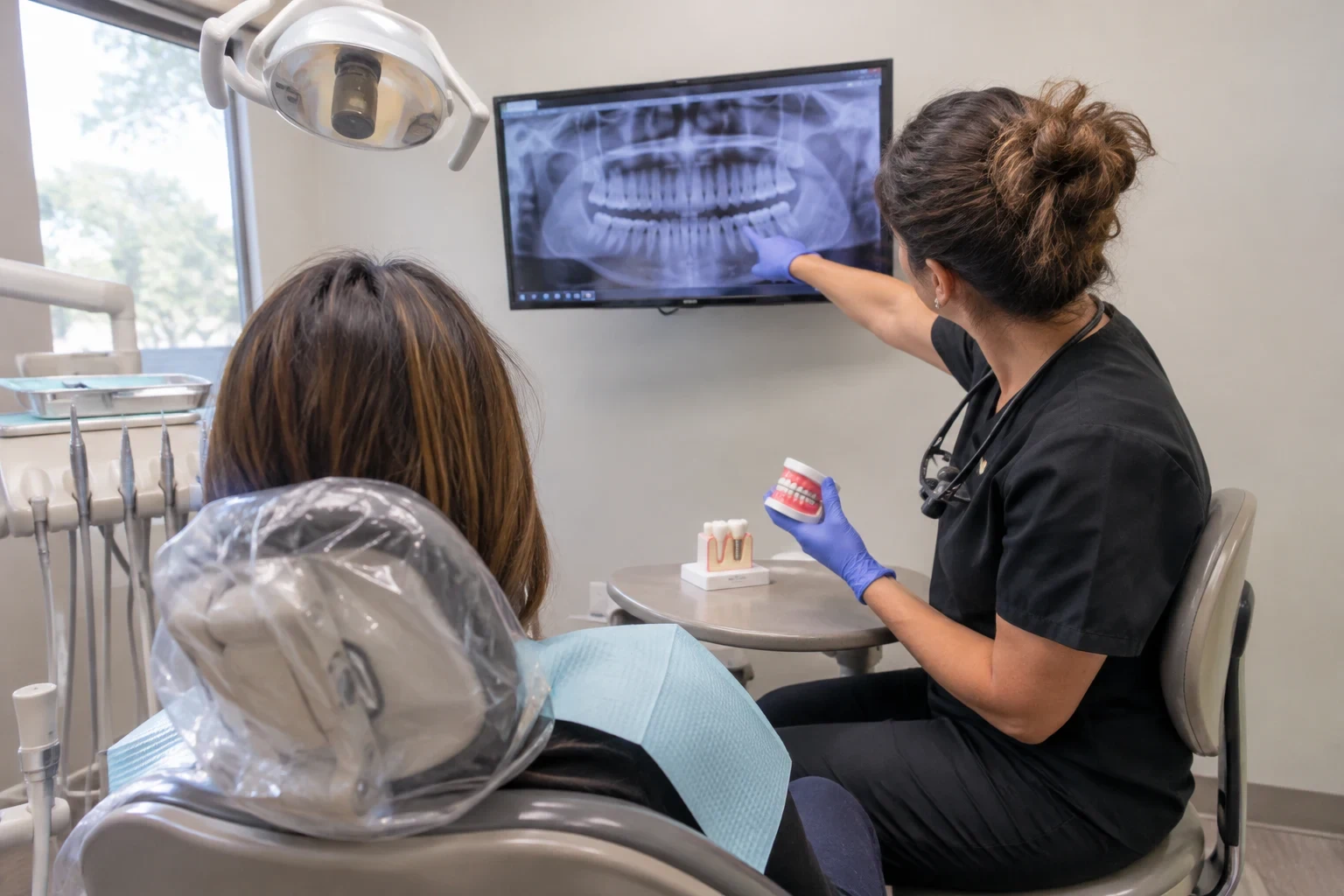
- Digital X-rays show how the roots are shaped and what sits next to them. If a root lies close to the sinus or a nerve, a CBCT scan gives a three-dimensional view so we plan around it before you sit down.
- Numbing that we test first
- We place local anesthetic and check the area before any instrument touches the tooth. Pressure is normal. Sharp pain is not, and if you feel it we stop and give more.
- Dividing multi-root teeth
- Molars carry two or three roots that often bend. Instead of levering the whole tooth, we cut it into sections and lift each root out on its own, which keeps the thin bone walls from fracturing.
- Grafting the socket for a future implant
- Patients who expect to get an implant later can have bone graft material packed into the socket right after removal. The graft helps the ridge keep its height and width as it heals.
- Aftercare in writing, plus a check-in
- You go home with gauze, written instructions and a follow-up plan. We describe what normal healing looks and feels like, so a real problem is easy to spot.
When a Tooth Is Likely Past Saving
A fracture down into the root
A crack that stays in the crown can often be fixed with a filling or a crown. When it travels down the root, bacteria move in and the tooth usually cannot be sealed again.
Movement when you bite
A tooth that shifts under pressure has usually lost bone to gum disease. Beyond a certain point, splinting it to its neighbors will not hold.
A bump on the gum that keeps coming back
A small swelling near the root is often an abscess draining. If a root canal cannot treat it, removing the tooth takes away the source of the infection.
Too little tooth left for a crown
When decay leaves almost no healthy structure above the bone, a crown has nothing to grip and a filling would break down fast.
Decay hidden under old dental work
New decay can form beneath an aging crown or bridge and hollow out the root. We check on X-ray and tell you straight whether retreatment is realistic.
What Moves the Price of an Extraction
Two things set the fee: how the tooth has to be removed and what the socket needs once it is empty. You get the cost before any treatment starts, along with our best estimate of what your plan will cover. If you carry PPO coverage, there is a good chance we take it, since our office is in-network with 15+ major PPO dental insurance plans. For people with no dental coverage at all, we run an in-house Membership Plan for uninsured patients.
Forceps-only or surgical
A tooth that is fully above the gum with a single straight root can usually be lifted out with forceps. If it has snapped off at the gumline, or we need a small incision and have to section it, the visit runs longer and is coded as a surgical extraction.
How the roots are shaped and placed
Long, hooked or fused roots take extra care. Roots that sit near the sinus floor may also call for a CBCT scan first.
Graft material in the socket
Socket preservation adds material and chair time. It can spare you a bigger bone graft down the road if dental implants are part of the plan.
How many teeth come out
Taking out several teeth in one appointment, as often happens before dentures, is priced differently than removing one.
How Your Extraction Visit Goes
- 1
Exam and honest options
We examine the tooth, review the X-rays and explain whether it can be saved. If removal is best, we walk through replacement choices such as an implant, bridge or denture before you decide.
- 2
Numbing and checking
We apply topical gel, then local anesthetic, and wait until the area is fully numb. Most single extractions take well under an hour once we begin.
- 3
Gentle removal
Using elevators to loosen the ligament and forceps to lift the tooth, we work slowly. Multi-rooted or broken teeth are sectioned so the bone stays intact.
- 4
Protecting the socket
We clean the socket, place graft material if you are planning an implant, and may add a few stitches. Gauze pressure helps a stable blood clot form.
- 5
Healing check
The first few days matter most. Avoiding straws, smoking and hard rinsing keeps the clot in place and lowers the risk of dry socket.
Common Questions About Extractions
Is having a tooth pulled painful?
Local anesthetic shuts off the pain signals, so what most patients notice is firm pressure and some pushing. We confirm the area is numb before we begin and pause to add more if anything feels sharp. Soreness afterward tends to be worst over the first two days, and we send you home with a plan for managing it.
How much healing time should I expect?
Gum tissue usually closes over the socket within one to two weeks. The bone below keeps filling in for several months. When an implant is planned, we schedule placement around that bone healing.
What causes dry socket, and how can I prevent it?
Dry socket starts when the blood clot dissolves early or gets pulled loose, leaving the bone uncovered. It shows up as a deep, throbbing ache two to four days after the extraction. For the first several days, avoid straws, smoking and hard spitting, and phone us if the pain is climbing instead of easing.
Do I need to replace the missing tooth?
In most cases, yes. The teeth beside the gap tend to tip into it, and the tooth above or below can drift out of its socket, which changes how you bite. Our Dental Implants and Dentures pages lay out the main choices, and we go over them with you at the exam.
Who performs the extraction?
Extractions are done here at our office by our Board-certified team. Wisdom teeth bring their own set of concerns, so we explain those on the Wisdom Teeth Removal page.
Is there a way to pay over time?
Yes. We offer 0% interest financing for up to 24 months. Checking whether you qualify for preapproval has no effect on your credit score. Before any work begins, we sit down with you and go through the numbers line by line.

Have That Sore Tooth Checked
Bring the tooth in for a $25 focused evaluation. We take digital X-rays, add a CBCT scan if the roots need a 3D view, complete a comprehensive exam, and finish with treatment planning and a consultation. You leave knowing whether the tooth can be saved and what comes next.