ServicesDentures
Dentures in Trophy Club
We make full and partial dentures that fit your gums, match your bite and let you chew without a fight. If a loose denture is the problem, we can also show you how two dental implants can hold it in place.

When dentures are the right answer
A denture replaces several missing teeth, or a full arch, with acrylic teeth set in a gum-colored base. A full denture rests on the ridge of bone and gum where teeth used to be. A partial clips to the teeth you still have, using a metal or flexible framework, so healthy teeth stay in service.
Dentures make sense when many teeth are missing or failing and saving each one would cost more than it would return. They also work well for patients who want a full set of teeth back without surgery. If you would rather have teeth that do not come out at night, we will walk you through dental implants as well, and give you a straight comparison.
Your plan is set by a board-certified dentist who looks at your bone, gums and bite before recommending anything. We treat it the way we would for a neighbor: tell you what we see, and let you decide.
What your denture work includes
Exam and imaging
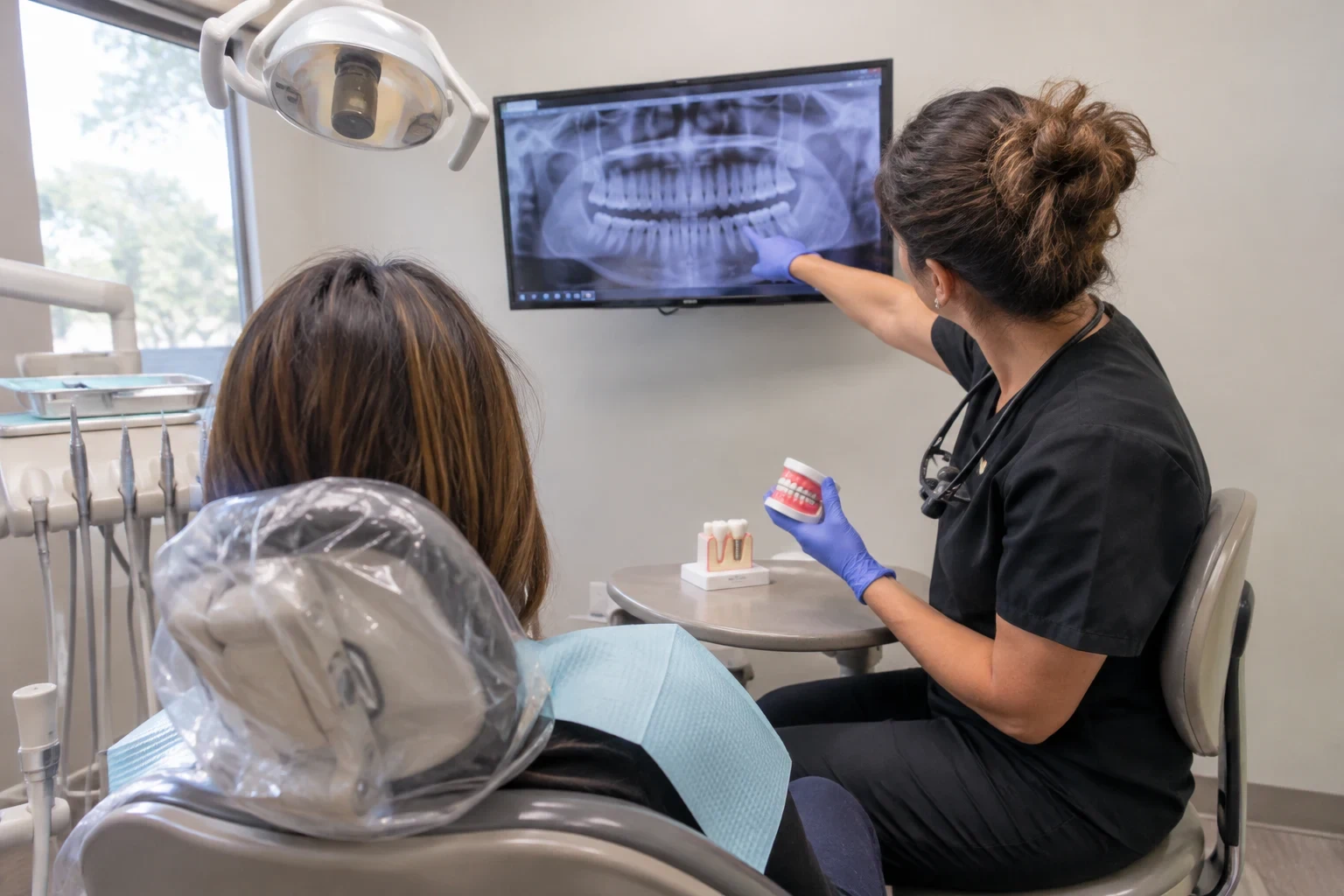
We check the remaining teeth, the gum ridges and the jaw joints, and take digital X-rays. A CBCT scan is added when bone volume matters, such as when implants may be part of the plan.
Impressions and bite records
A first impression captures the overall shape, then a custom tray picks up fine detail along the borders where the denture seals. A bite record sets the height of your face and how the upper and lower teeth meet.
Wax try-in
Before anything is processed, you wear the teeth set in wax. You see the shape, shade and lip support, and we can move teeth while it is still easy to change.
Partial frameworks
For partials, we choose between a cast cobalt-chromium framework, which is thin and strong, and a flexible nylon base for some cases. Clasps are placed to hold the partial without overloading the teeth they grip.
Delivery and adjustments
We fit the finished denture, mark pressure spots and relieve them. Follow-up visits fine-tune the fit as your tissue settles in the first weeks.
Implant-retained options
Two or more implants with snap attachments can lock a lower denture in place. We can plan this with a new denture or, in some cases, adapt one you already wear.
Signs it may be time for dentures or a new set
- Several loose or failing teeth
- When gum disease has loosened many teeth, patching them one at a time often does not hold. A planned move to a partial or full denture can stop the cycle.
- Your current denture rocks or drops
- After teeth are lost, the jawbone slowly shrinks. A denture that fit well years ago can start to slip, and adhesive is only covering the gap.
- Sore spots that keep coming back
- Recurring ulcers under the base usually mean the fit has changed or the bite is uneven. Left alone, they make eating and speaking harder.
- Trouble chewing firmer food
- If you avoid raw vegetables or steak, the teeth may be worn flat or the bite may have collapsed. Worn denture teeth also shorten the face and deepen the lines around the mouth.
- Cracks or repairs that keep failing
- Acrylic that has been glued more than once is weak at the repair line. A reline or a new denture is usually the better fix.
How a denture is made, step by step
- 1
Evaluation and plan
Your first visit covers the exam, X-rays and a talk about full, partial or implant-supported options. You leave with a written treatment plan and the cost laid out by item.
- 2
Extractions if needed
Teeth that cannot be kept are removed, gently and with local anesthetic. If you want teeth right away, an immediate denture can be placed at that visit and relined once healing is done.
- 3
Impressions, bite and try-in
Over a few appointments we take impressions, record your bite and try the teeth in wax. Each step is a checkpoint, so problems are caught before the denture is finished.
- 4
Delivery and follow-up
We seat the denture, check the bite with marking paper and smooth any pressure points. Expect a couple of short follow-ups while you learn to eat and speak with it.
What affects the cost of dentures
What you pay for dentures depends on the type, the materials and how much has to happen before the denture is made. Every item is priced in writing before treatment begins, so the total stays where we said it would. On the insurance side, our office is in-network with 15+ major PPO dental insurance plans, and our in-house Membership Plan is there for anyone without dental coverage. To spread out payments, we offer 0% interest financing for up to 24 months, and checking for preapproval has no credit score impact.
- Full, partial or both arches
- Replacing both upper and lower arches takes more lab time than a single partial. A cast cobalt-chromium partial is priced differently than a flexible nylon one.
- Immediate or conventional
- An immediate denture needs a reline or remake once the gums finish healing, which adds a step. A conventional denture is made after healing and skips that stage.
- Work done first
- Extractions, smoothing of sharp bone and treatment for gum disease come before the denture and appear as separate lines on your estimate.
- Implant attachments
- Implants with snap attachments add cost but change how the denture stays put. We lay out both versions side by side so the difference is clear.
Common questions about dentures
- What is the adjustment period like with new dentures?
- Speech usually settles within days, and most patients are chewing comfortably after a few weeks. The tongue and cheek muscles need time to learn to steady the denture, a lower one especially. Begin with soft foods in small pieces and practice by reading aloud. Early sore spots are expected, and we relieve them at your follow-up visits.
- Can I leave with teeth on the day my teeth are removed?
- Yes, if we make an immediate denture ahead of the extractions. We seat it right after the teeth come out, so you never go without. The gums shrink as they heal, so a reline is needed a few months later.
- Why does my lower denture move more than my upper?
- The upper denture covers the palate, and that broad surface creates suction. The lower rests on a narrow ridge with the tongue working right next to it, so there is much less to grip. Two implants with snap attachments are the most dependable way to steady a lower denture.
- Will my dental insurance help pay for dentures?
- Many PPO plans pay a portion of denture costs, though some have waiting periods or limits on how often a denture can be replaced. We look up your benefits before treatment and show you what your plan should cover. Without insurance, our Membership Plan and financing are both options.
- How long should a denture last?
- As the jawbone changes, the base typically needs a reline every few years, and the acrylic teeth wear down with daily use. Many patients replace the whole denture after several years once the bite has flattened. Wear it to your checkups so we can spot fit changes early.
Let's look at your smile and your options
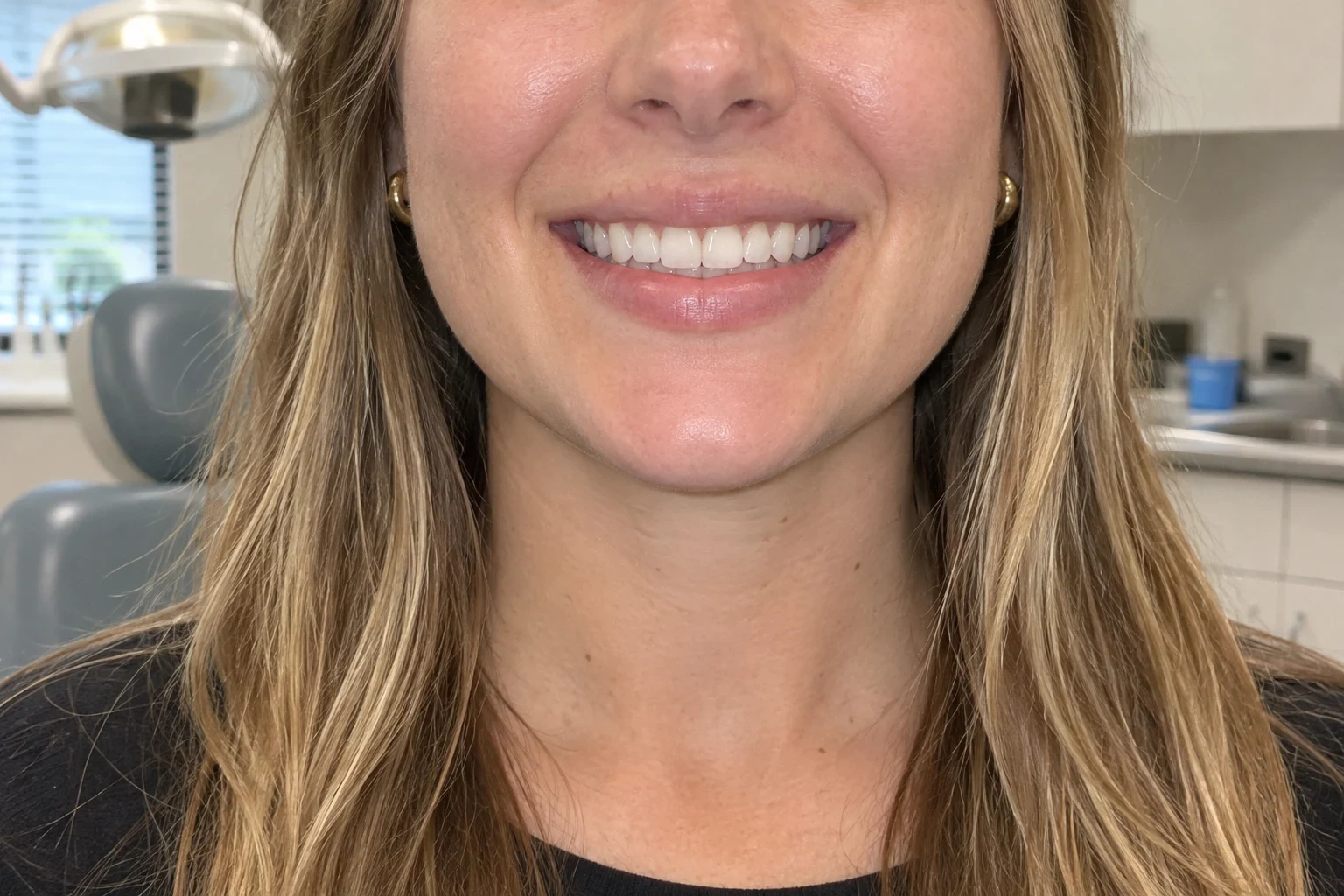
A short visit tells us whether a full denture, a partial or an implant-retained set makes sense for you. Bring your current denture if you have one, and we will check how it fits.